Sunday, June 20, 2021

Polypotamia and the Ochethi Sakowin


Fleeing the Axe of Progress.

Your humble narrator began last fall a new job as editor of the Indiana Magazine of History. My statement of editorial and historical philosophy appeared in the March 2021 issue, free of paywall. The essay's title, "The View from Polypotamia," evokes an uncomfortable truth about the Hoosier state and the Midwest generally: white policy makers viewed Indiana as tabula rasa, as a featureless "flyover country," long before it became a place most Americans flew over or drove through. Officials imposed new names on the landscape and divided up the land and resources as they pleased, in pursuit of their own vision of socioeconomic development, and woe betide anyone they considered incompatible with that vision, like Native Americans or white subsistence farmers. To replace this blank-slate assumption with a view of the state as a mosaic of stories, what Lakota activist Mary Crow Dog would call "one vast winter count," is to pursue a more human course of scholarly inquiry and social development.


Apropos of Lakotas, my review of Pekka Hamalainen’s Lakota America (2019) appeared in the online journal Reviews in History at the end of April. Modern Lakota writers and NAIS scholars aren’t terribly happy with Professor Hamalainen’s book, and there’s much in it to make one unhappy. The book valorizes an expansionist, high-consumption warrior elite without fully accounting for the ecological and social damage they wrought, both within and outside the Lakota homeland. Nor does it consider the alternative paths of survival and survivance that Lakotas and their neighbors created in the twentieth century. Conceptually, it is also a somewhat lazy book. The author is a gifted researcher and writer, but at bottom his thesis is “Remember what I wrote about the Comanches in Comanche Empire (2008)? Well, the Lakotas were just like that.” I guess there’s a market for familiar stories.

Sunday, April 18, 2021

Slouching Past the End of the World


"In many other places, too...the apocalypse appeared to have arrived and yet it was not apocalyptic, which is to say that while the changes were jarring they were not the end, and life went on, and people found things to do and ways to be and people to be with, and plausible desirable futures began to emerge, unimaginable previously...and the result was something not unlike relief." (Mohsin Hamid, Exit West [2017], p. 217)


The pandemic is not over, but spring has arrived, and life goes on, and some desirable futures appear more visible now than in 2020, even though so many people, perhaps most of us, merely want to return to the way things were Before. If it would bring back the dead, I might even think that was a good idea.

Sunday, February 28, 2021

No Love for Rhode Island


In the 1780s it was fair to describe York, Pennsylvania as a Federalist town. On Independence Day of 1788, the community’s notables celebrated with a parade honoring the states that had sent delegates to the previous year’s Federal Convention. They selected from the York Academy twelve white children, all prospective members of the American elite, to carry flags with the represented states’ names. The inherent message was clear: the proper inheritors of the Revolution, and guardians of the republic’s future, were the citizens, well-to-do and otherwise, who supported the federal Constitution.

Political cartoon, celebrating New Hampshire's ratification, 6.21.1788

That document's future still remained in some doubt. As of July 1788 ten states, including Pennsylvania, had ratified the Constitution, but New York had not yet done so and was in the middle of a contentious state convention. North Carolina's convention had not yet met, and when it did so it voted to defer rather than approve ratification. The York parade's organizers still believed, apparently, that these two states would ratify and sent representatives to the new Congress. They turned their fears for the Federalist movement's future into anger at one state which had not even sent delegates to Philadelphia: Rhode Island.

“Rogue’s Island” had earlier angered elite proponents of a stronger national Union by vetoing a tariff amendment to the Articles of Confederation, and by passing a paper money law perceived as unfavorable to creditors in other states. York’s leaders denigrated the Ocean State with a black flag, carried behind the other states' flags by an African-American boy "in crepe." On the banner were sewn or painted these words:


I will divide her among the nations

I will take away her name

For her iniquity hath abounded

Her unrighteousness hath vexed the land.


Strong words, adapted from Scripture (though your author has not yet been able to locate the book, chapter, or verse). Rhode Islanders, as far as these Pennsylvania Federalists were concerned, could not consider themselves part of the chosen people. Indeed, God would surely cast them down for separating themselves from the rest of the Elect, for worshiping the false idol of paper currency, and for failing to pay their tithe to the national regime. When in 1790 the new U.S. government voted to embargo trade with Rhode Island unless it ratified the Constitution, York's leaders doubtless supported this act of coercion. One could only negotiate with the unrighteous for so long.

Modern readers like myself are struck, of course, by the cruel detail of the young Black flag-bearer. The implicit message in his placement within the parade was that African Americans, too, belonged with the nameless and despoliated peoples who had defied God's word. At best the parade organizers intended the child, who may have been enslaved,* to play the role of a jester, a comic outsider employed to deride those his masters also considered their inferiors. Probably the parents of the twelve young pupils who marched in the ranks of the righteous thought that associating Rhode Island with a bondsman or outsider was funny. Some people get their laughs from punching down.


***

Source: Boonshoft, Aristocratic Education and the Making of the American Republic (Chapel Hill, 2020), 75.


 *Pennsylvania's legislature passed a gradual emancipation act in 1780, but slavery remained legal in the state for several more decade.

Saturday, December 05, 2020

Any Good News in 2020?


It was the worst of times, it was the best of times.

2020 was a wretched year for many, particularly those of us who lost loved ones. Even (relatively) happy election news here in the United States did not dispel the gloom that pandemic and economic shutdown have cast upon the land. Luckily, Future Crunch has compiled regular updates on what good news the year has had to offer, and it turns out there was a fair amount of it. My summary of the highlights follows.

*  

In the United States, foster-care adoptions rose by 20 percent over a five-year period. Utah banned gay “conversion” therapy, and Virginia banned economic discrimination against LBGTQ people. The U.S. Supreme Court, in McGirt v. Oklahoma, upheld broad jurisdictional rights for Native American nations. Elsewhere, Saudi Arabia banned child marriage, Iran criminalized child neglect, Sudan repealed sharia law, and Gabon decriminalized homosexuality. Kazakhstan eliminated the death penalty, with perhaps an exception for Borat. Worldwide, boys and girls reached gender parity in primary and high-school attendance.

The climate-induced wildfires in Australia and California gave environmental news an apocalyptic tinge, but there were many favorable developments on this front too. Austria and Sweden closed their last coal-powered electrical plants. Tesla produced its one-millionth electric car and Volkswagen rolled out its last non-electric car. Germany announced plans to turn 60 old military bases into wildlife refuges. The Seychelles and Belize created new oceanic wildlife reserves. India planted more than 250 million trees, while Senegal, with its rather smaller population, announced that its people have planted 150 million mangrove buds since 2010. China, for reasons doubtless related to the coronavirus pandemic, banned the eating, trading, and hunting of wild animals.

Our murderous old friend COVID-19 dominated this year’s health news, but the disease may come under control next year: researchers have developed three effective vaccines in less than twelve months. Health outcomes improved for other aspects of human life: HPV infections among English girls fell to zero, Scotland and New Zealand made sanitary products free for public distribution, and dementia and Alzheimer’s rates in the U.S. and Europe fell fifteen percent over a five-year period. AIDS deaths reportedly fell five percent in 2018-19, and a new anti-retroviral drug for women just debuted. Air-pollution deaths in China fell by 60 percent between 2013 and 2019. Globally, tuberculosis deaths declined by more than 15 percent during the same period. Africa officially eliminated polio, which now remains extant only in two countries in the world.    


And 150 new baby elephants were born in Auboseli National Park in Kenya. Toot toot.

Friday, October 30, 2020

Let Us Now Praise Famous Megalomaniacs


As someone who is uncomfortable receiving praise, it has always amused me to see how extravagantly modern authoritarian leaders (dictators, captains of industry) expect

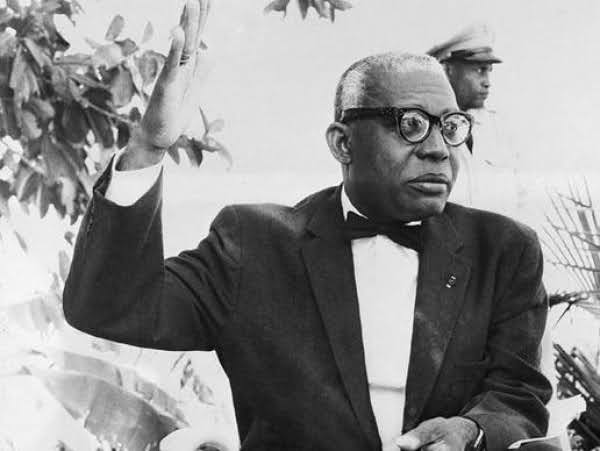
their underlings to flatter and applaud them. The dictator’s hunger for lavish panegyrics manifests itself most noticeably in the elaborate titles he (very rarely she) assumes in public. One beauty I recently encountered belonged to Francois Duvalier, chief executive of Haiti from 1957 to 1971: “President for Life, Maximum Chief of the Revolution, Apostle of National Unity, Benefactor of the Poor, Patron of Commerce and Industry, and Electrifier of Souls.” I can’t improve on that, except to suggest that given Duvalier’s murderous reputation, “Electrifier of Souls” may have had an unpleasant double meaning.


Sources: Stewart Bell, Bayou of Pigs: The True Story of an Audacious Plot to Turn a Tropical Island into a Criminal Paradise (2008). See also Laurent Dubois, Haiti: The Aftershocks of History (2012), which argues that Duvalier probably adapted some of his titles from those given to nineteenth-century monarch Henry Christophe, “Uncontestable Leader of the Revolution and Apostle of National Unity” (pp. 323-51, quote 343)

Saturday, September 19, 2020

The Great Eel Riot


 "In Amsterdam, the 'Eel Riot' (Palingoproes) occurred [in 1886], when the police tried to put down a revolting dock-district game in which eels were pulled to bits; it resulted in several dozen deaths and hundreds of casualties and arrests." (Norman Stone, Europe Transformed [Harvard UP, 1984], p. 46.) Stone attributes this and other contemporary uprisings to the stresses of the European economic depression in the 1880s. From our perspective in the modern United States, shortly after the "police riot summer" of 2020, we may instead consider why a riot over such minor causes turned so deadly (24 people killed). In the Dutch case, the cops opened fire on the rioters after the latter attacked a police station, and the most gravely wounded had no access to medical care before they died. A comparable incident last summer in Minneapolis, in which riotous protesters - with a far more serious cause than "give us back our eels" - actually set fire to a police station, resulted in no deaths (IIRC) and few to no injuries, because the cops were prudent enough to holster their guns and get out. Modern American police aren't saints, God knows, and too many of them have blood on their hands, but there is something to be said for their relative professional restraint. There is also something to be said for keeping police of all times and places away from lethal weapons.

Friday, July 03, 2020

Caught the Car


An empire in decline rarely admits it. The republic of Venice, whose trading empire once dominated the Mediterranean, sustained a nearly mortal blow in the Candian War (1645-69). During a quarter-century of bitter fighting with the Ottomans, Venice lost her prime colony of Crete, much of her navy, and a good part of the public treasury. Rather than retrench and recover, La Serenissima sought revenge and new conquests. The chance for both came in the 1680s, when most of Central Europe’s fighting men (including George of Hanover, future King of England) defeated a Turkish army outsides of Vienna. In 1684 Venetian leaders opportunistically joined the Christian powers’ war on the wounded Ottoman Empire. Crete was the objective, but it proved a prize out of reach; Venice lacked the ships and men to take it. Instead the republic fought a bloody campaign on the Greek mainland, briefly occupying Athens (where Venetian artillery wrecked the Parthenon) and capturing the principal towns of the Peloponnese. After a few desultory attempts to recapture Greece’s southern peninsula, the Ottomans in 1699 ceded the region to Venice. The republic now had a strategic base to develop and a large new colony to govern.       

Venice soon revealed itself as the proverbial dog who had caught the car. It lacked the resources to defend Morea, and its officials lacked the inclination to govern its people fairly. The republic did encourage western Christian farmers and merchants to settle in the colony, offering them land grants and protected markets for silk and foodstuffs. Morea’s indigenous majority, however, did not prosper under Venetian rule. Many lost their land, fell more deeply into debt, or found themselves pressed by heavy taxes or corvee labor demands. At least one-sixth of the population (as measured by village abandonment) had died or fled during the Venetian conquest, and others, both Muslim and Christian, ran away to Turkish-occupied Greece in the early 1700s. The province’s overlords had to institute sea patrols to prevent their subjects from running away to greater freedom in the Ottoman Empire.

Venetian fortifications at Acrocorinth, Wikimedia Commons
Turkey’s re-conquest, one might say liberation, of Morea came less than two decades after the peace treaty with Venice. Partial credit for the success of Turkish arms goes to Charles XII of Sweden, who after the Battle of Poltava took refuge in Ottoman territory. His overconfident Russian adversary Peter I gave chase, only to find himself surrounded by a Turkish army. In subsequent negotiations the tsar traded his freedom for the surrender of several Russian border fortresses. With the Russians at bay, Ottoman officials could contemplate a rematch with Austria and Venice, and as the weaker of the two powers the republic made a better first choice. In 1714, the same year that George of Hanover became King of Great Britain, Grand Vizier Silahdar Damat Ali Pasa arranged a declaration of war. Morea was the closest and softest target, as Venice had only 3,000 troops in the entire kingdom and few locals wanted to fight for the colonizers. Silahdar brought an army to the Isthmus of Corinth in Jun 1715, reduced the impressive but undermanned citadel of Acrocorinth in a five-day siege, and occupied Morea’s most important strategic town. The remaining fortresses on the peninsula fell to Turkish troops a few months later. 

Not everyone in the reconquered province benefited from the renewal of Ottoman rule: the Grand Vizier rounded up and executed any Muslim apostates who had converted to Christianity. Most Moreans found that the Ottoman “yoke,” so-called, lay more lightly on their shoulders than the Christian Venetian one. The province’s population and economy recovered, and even Christian merchants prospered in subsequent decades, even as their former protectors’ fortunes continued to decline.               

Sources: Alexis Malliaris, “Population Exchange and Integration of Immigrant Communities in the Venetian Morea,” in Siriol Davies and Jack Davis, eds., Between Venice and Istanbul (Amer. School of Classical Studies in Athens, 2007), 97-108; Kenneth Setton, Venice, Austria, and the Turks in the Seventeenth Century (American Philosophical Society, 1991), 400, 426-38; J.M. Wagstaff, “War and Settlement Desertion in the Morea,” Transactions of the Institute of British Geographers (1978): 295-308