Showing posts with label Presidents. Show all posts

Monday, February 19, 2024

Was Lincoln a Douche?

On Presidents’ Day it is customary to laud Abraham Lincoln, sixteenth president of These United States, as the greatest of all American leaders. The man saved the Union, ended slavery, told good jokes, had nice legs - what’s not to like? Historians in a recent poll affirmed their profession’s usual ranking of Lincoln as the Number One guy, well ahead of the current incumbent (No. 14) and his predecessor (No. 45). Old Abe of course has his critics, and not just among unreconstructed neo-Confederates. President Lincoln’s policy toward Native Americans - a combination of military repression and malign neglect - proved so destructive that Congress temporarily took over the conduct of Indian Affairs after Appomattox. Closer to our own time, Bobby Wilson, a member of the 1491s, assessed Lincoln’s relationship with his own Dakota nation in a short, pointed video, “Lincoln Was a Douche.” Reviewing the president's record, I kind of have to agree.

A few years ago, the organizer of a podcast called Lincoln Log asked me to offer my scholarly assessment of Number Sixteen on his show. In his invitation the podcaster asked me how Lincoln had affected my life personally, which suggested that the show’s attitude toward Mr. Rail-Splitter was not merely reverential but theological. In my reply, which I offer below, I effectively declined the invitation:     


My recent scholarship endeavors to place Indigenous Americans at the center of their own stories, and to move white policy-makers toward the background…My views on Abraham Lincoln are shaped by the impact on Native Americans' lives of policies for which Lincoln, as president, bore ultimate if not always proximate responsibility.

Navajo prisoners at Bosque Redondo (Wikimedia Commons)

"The years of Lincoln's presidency were ghastly ones for tens of thousands of American Indians. Your listeners are probably familiar with the story of the Dakota Sioux* rebellion of 1862 and the 38 men Lincoln hanged for insurrection; they are probably less familiar with the hundreds of Minnesota Ho-Chunks deported after the Sioux War (even though they had nothing to do with it), and with John Pope's deadly punitive campaign against the Lakota[s]...who also had nothing to do with the Dakota rising. Lincoln was less directly responsible for the California and Arizona militias' war of extermination against the Apaches, the Colorado militia's infamous attack on the Cheyenne encampment at Sand Creek, and Kit Carson's forced removal of the Navajos to Bosque Redondo, where 4,000 people died in four years. All of these military actions occurred, however, in the course of a...war with the Confederacy which Lincoln was determined to prosecute to unconditional victory, and all occurred in regions where Lincoln or his subordinates feared that Native American warriors might become recruits or catspaws of the CSA. (Not without some justification: the Five Civilized Tribes of Indian Territory did become formal allies of the Confederacy in 1861.) I have found little to no evidence that President Lincoln intended his Western commanders to fight a frontier war with kid gloves on.

"It is worth noting that the intense, nearly genocidal character of the Indian Wars of 1862-65 generated growing criticism from white Americans. At the end of the Civil War Congress endeavored to wrest control of Indian policy away from the Executive Branch, setting up its own peace commission and initiating its own peace treaties with the Plains nations. A few years later President Ulysses Grant, taking back a leading role in Indian policy-making, called his new approach the "Peace Policy," to distinguish it from the more bellicose actions of his immediate predecessors - including Lincoln. Perhaps if he had survived his fatal trip to the theater Lincoln would have embraced a similar policy a few years earlier, but I haven't found much support for this counterfactual speculation.

"…In an interview or conversation about 'Lincoln and the Indians,' I would emphasize the experiences of Native Americans, and while I could certainly try to explain the actions of President Lincoln and his subordinates, I would not be inclined to excuse or justify them. This approach to the subject may be too pitiless for your audience. If not, I would be glad to talk with you further about taking part in an episode of your podcast.


I didn’t appear on the Lincoln Log

I rather like Lincoln as a person, and think he did some remarkable things as president, but the responsibilities of a modern historian - to tell the truth about the past - differ considerably from those of a hagiographer or professional moralizer.


* I would not use this term today, as many people find it offensive.

Friday, November 25, 2022

Any Good News in 2022?

Courtesy of Future Crunch, here is a selection of good-news stories from the past year. Most did not make it into mainstream media (whatever that means nowadays), because good news is generally statistical, while bad news - “powerful people behaving badly,” “something went wrong” - often takes the form of a narrative. We like a good story, even if it makes us feel terrible. These stories are drier, but won’t leave the reader feeling helpless and hopeless.


Africa: Morocco expanded paid paternity leave to 15 days. Niger has reclaimed 400,000 hectares of desert land under the multi-national Green Wall project. Benin legalized abortion. Sierra Leone’s president announced the allocation of 22 percent of next year’s budget to education. Togo announced eradication of four tropical diseases, including trachoma and trypanosomiasis. The Central African Republic, Equatorial Guinea, and Zambia outlawed the death penalty. Rwandan hospitals used drones to make 250,000 medical deliveries.

Students in Sierra Leone. Credit: The Guardian


Asia: As of 2020, 97 percent of India’s households have access to electricity. The Philippines banned child marriage. “You’ll have to go to the United States for that sort of thing,” officials in Manila reportedly said. In China, the city of Chaozhou is planning a 43 GW wind farm in the Taiwan Strait. Thailand legalized medical marijuana.


Europe: Several large western European countries have announced plans to replace home gas boilers with heat pumps and boost wind turbine construction. A certain Russian president may have had something to do with this. Poland accepted over two million refugees from the Ukraine war. 92 Saimaa seal pups were born in Finland. Seville, Spain is building underground canals to help cool the city. London turned seven billion lbs. of earth from the Elizabeth Line excavation into a wetland bird sanctuary. British firms announced an increase in productivity from their experimental four-day work week; four out of five plan to continue the experiment voluntarily.

Saimaa seal stamp (Wikimedia)


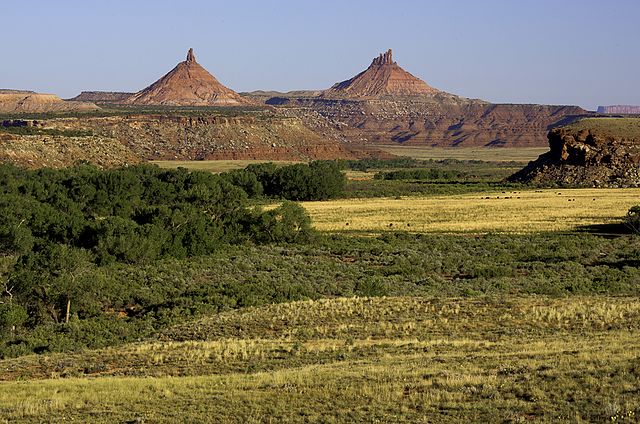
North America: Canada approved psilocybin and MDMA as psychiatric drugs. Canada also announced plans to increase annual immigration to 500,000 by 2025. I don’t know if these stories are related. The following two might be: solar power capacity in the United States has risen 2,000 percent since 2011, and Duke Energy announced it will fully exit coal-fired power generation by 2035. The American Inflation Reduction Act allocated about $40 billion for conservation. The Snoqualmies bought 12,000 acres of ancestral land in Washington state. Five other Native nations partnered with the U.S. to manage Bears Ears National Monument. Colorado, California, and Maine will provide free school meals to all public-school students. California announced plans to manufacture insulin for state residents. In Mexico, same-sex marriage is now legal in all states, and bullfighting is illegal.

Bear's Ears Natl. Monument (Wikimedia)


South America: Lula defeated Jair Bolsonaro in the Brazilian presidential election. This is unqualified good news for the whole planet. Also in Brazil, the golden lion tamarin has been saved from extinction. The Rainforest Trust protected one million more acres of tropical forest in Ecuador, Central America, and southeast Asia.

I AIN'T DEAD YET (Wikimedia)


The World at Large: Artemis I successfully launched and rounded the Moon in November. Global child mortality reportedly dropped from twelve to five million between 1990 and 2020. The Intl Energy Agency reports that renewable and nuclear power now employ more people globally than fossil fuels. In Australia, ranchers are raising asparagopsis seaweed as an additive to cattle feed. It will reduce methane omissions by up to 95 percent and make cows more comfortable in social situations.


Artemis I heads to the Moon (Wikimedia)


Sunday, September 22, 2019

Some Notes on U.S. Presidential Elections and Foreign Interference


The Wall Street Journal reported on September 20 that Donald J. Trump, president of these United States, recently called the president of Ukraine to ask him for a criminal investigation into Hunter Biden. Mr. Biden has business ties to Ukraine and, more importantly, is the son of former U.S. vice-president Joe Biden, currently a leading Democratic candidate for president. DJT allegedly threatened to withhold American military aid from Ukraine (which has in recent years had a spot of bother with Russia) unless he got what he wanted. It is not the first time Mr. Trump solicited foreign aid in a presidential election. Should he win re-election and make good his threat to seek a third term*, it won’t be the last.

Such solicitations remain rare in American political history. French minister to the U.S. Pierre Adet did attempt to swing the 1796 presidential election in favor of the Francophile Thomas Jefferson, but did so without Jefferson’s approval and without success. The Confederate States of America would surely have welcomed the election of Democrat George McClellan to the presidency in 1864, but, so far as I know, the CSA spent no resources to ensure Lincoln’s electoral defeat. Nearer our own time, Ronald Reagan’s campaign allegedly offered covert military aid to Iran in return for its retaining American hostages until after the 1980 election. A 1993 Congressional investigation into the so-called “October Surprise” conspiracy found no persuasive evidence.

Does history repeat itself? Sure hope so.
Prior our present Reign of Error, only one U.S. presidential candidate deliberately sought foreign assistance with his election bid: Richard Nixon. (Surprise!) In 1968 Nixon believed that a successful peace accord between North and South Vietnam would help the incumbent party’s candidate, Hubert Humphrey, win the presidency. Through intermediary Anna Chennault, he persuaded the president of South Vietnam to withdraw from peace talks with the North, implying that the RVN government would get a better deal from him than from the Democrats. Instead they got seven more years of war while Nixon got the White House. That Richard Nixon’s presidency ended poorly should hearten those critics of President Trump who hope that history, in this case, will keep repeating itself.

DJT deserves some back-handed credit, I suppose, for revealing the weakness of the safeguards against foreign electoral interference in the U.S. Constitution. The framers of that document did worry that “foreign powers” might seek “to gain an improper ascenden[cy] in our councils…by raising a creature of their own to the chief magistracy of the Union” (Federalist 68). They provided against such interference through the emoluments clause, making it illegal for federal office-holders to receive remuneration or patronage from other sovereigns; through the restriction of the presidency to “natural-born” citizens; and through the institution of the Electoral College, whose members’ good judgment would prevent a foreign potentate’s stooge from winning election. All of these protections proved useless against the Man from Mar-a-Lago. The emergence of political parties turned the Electoral College into a rubber stamp; fanatical primary voters and vote-suppressing state legislatures now play a vastly larger role in choosing presidents. Jus soli electoral qualifications have proven no guarantee of loyalty to the United States, as the hundreds of thousands of American-born men who fought for the Confederacy demonstrated. The emoluments clause hasn’t stopped DJT from raking in money - probably millions of dollars - from foreign governments making use of his real estate. Another clause of the Constitution, identifying bribery as a “high crime and misdemeanor,” hasn’t stopped President Trump from soliciting a bribe, in this case valuable political campaign services, from a foreign government, in this case Ukraine. That clause also identifies bribery as grounds for impeachment, which has proven a clumsy and ineffectual instrument of presidential removal, except in the case of…Richard Nixon. What an odd coincidence.   


* The Constitution currently prohibits twice-elected presidents from seeking another term, but as we’ve noted Mister Trump and his followers have little but contempt for that document.

Wednesday, February 13, 2019

The Shabbiest Horse Traders Get to Be "Statesmen"

Rep. James Tallmadge of New York introduced on this day 200 years ago the amendment that would bear his name and precipitate a famous inter-sectional controversy. The U.S. Congress was preparing to admit Missouri to the Union, and Tallmadge proposed a gradual ban on human slavery in the new state. Tallmadge's proposal gained considerable traction in the free northern states, whose white freemen had little love for African-American slaves but even less for wealthy slave owners. Public meetings expressed support for the free-state amendment, and the motion gained a majority vote in the U.S. House of Representatives. Southern whites were, shall we say, much less supportive. Their representatives blocked the amendment in the Senate (where free and slave states enjoyed parity), and Southern political leaders demanded that slavery remain legal in Missouri. The highest-ranking Southern white politician, President Monroe, argued that calamity would ensue if Congress blocked slavery's expansion: older states like Virginia could not rid themselves of "surplus" slave laborers, human property would fall in value, and overcrowding in the East would make slave rebellions more likely.

Ultimately, Northern and Southern Congressmen worked out one of their usual shabby compromises. Slavery would remain legal in Missouri and permissible in the new territory of Arkansas, but outlawed in the rest of the Louisiana Purchase, which in any event remained firmly in the possession of Native Americans. Northern white politicians would later regard the "Missouri Compromise" as a sacred compact of the Union, and its negotiator, Henry Clay, as their "beau ideal of a statesman." Southern whites would cast the Compromise aside as soon as they felt politically powerful enough to do so.

Thursday, May 18, 2017

The Jackson Ghost Removal Program

Last week my partner Susi and I went to Kentucky to meet my good friend Katherine Osburn (a historian at Arizona State) and her husband Charles. We had agreed to stay at a bed & breakfast, which turned out to have been the home of Governor Thomas Metcalfe (Kentucky's tenth exec) and a frequent stopping point for Metcalfe's friend Andrew Jackson. The owners took quiet pride in this; the guests were politely unimpressed.

The night we arrived, Katherine slipped on the front stairs and busted her face. She wound up in the ER in Paris and needed several stitches. She concluded that the ghost of Andrew Jackson was haunting the inn and stalking Native Americanist historians, and burned some sage to try to drive off his spirit. No luck. The next afternoon I became violently ill and experienced stabbing pain in my upper abdomen. My petite amie took me to Bourbon County Hospital, where the staff diagnosed me with blocked bile ducts and pancreatitis. Old Hickory had struck again. 

That evening, as I slept in a dilaudid haze, Susi again assailed Jackson's ghost, playing Beyonce music in every room of the house. That did it. No-one else got sick. Jackson's ghost returned to whatever spectral waste had spawned it.

Do not mess with Bey.

(The image above is the Cane Ridge Meeting House in Paris, KY, about ten miles from our B and B. Photo by the author.)

Monday, January 09, 2017

Anti-Presidents Day: Grover Cleveland


Grover Cleveland persists in our popular memory as a bundle of colorful details. He became president in spite of a sex scandal, winning as the candidate of “Rum, Romanism, and Rebellion” (a slogan that hurt his Republican opponent worse than Cleveland); served two non-consecutive terms as president, losing the office in 1888 despite winning the popular vote; and in his final term survived a secret operation to remove a mouth tumor. It would be nice to say that Cleveland, like his predecessor Chester Arthur, left behind a record of presidential accomplishments that merited his recovery from obscurity. Alas, in office the 22nd/24th president displayed the narrowness of vision and lack of creativity so typical of the White House’s denizens. Seeing himself as the heir of Jefferson and Jackson, he favored a small and inactive national government. President Grover opposed higher tariffs, Civil War veterans’ pensions, and federal disaster relief, which he claimed would “weaken the sturdiness of our national character,” and he blocked federal monitoring of Southern elections (which would have benefited black voters). He also supported Big Business in most of its forms. He favored the deflationary gold standard, even during the depression following the Panic of 1893; used federal troops to help crush the Pullman Strike of 1894; and hobnobbed with bankers and other princes of the Gilded Age. Essentially, he governed as a Democratic-Republican, simultaneously promulgating an outdated Jeffersonian vision of governance and quasi-Hamiltonian policies that favored the rich. We could say that he typified an era in which the American electorate evenly divided their votes between Republicans and Democrats. Cleveland tried to appeal to voters from both parties. A trimmer is not a leader, however, nor someone whose presidency benefits large numbers of people. The best one can say about Cleveland is that he wasn’t a total disaster.

Democrats probably wouldn’t even agree with that assessment. GC’s weak response to the Panic of 1893 helped Republicans take control of Congress and recover the presidency. They would not relinquish the White House to a Democrat for another sixteen years.

That Cleveland’s untidy personal life had little bearing on his subsequent political career does bear consideration. In Your Humble Narrator’s youth, politicos and the press believed that one sex scandal or unseemly divorce sufficed to ruin a person’s political ambitions, with Gary Hart and Nelson Rockefeller as Exhibit A. I doubt this was ever really true, and certainly Reagan (divorced) and Clinton (obvious horndog) demonstrated its irrelevance by the last quarter of the twentieth century. What voters dislike far more than an adulterer is a liar, as James Blaine (“Continental Liar from the State of Maine”) discovered in 1884. Cleveland at least acknowledged that he’d fathered a child out of wedlock and paid child support. Good enough, said the voters.

I imagine more Puritanical standards apply to female candidates for high office, American society being what it is. Whether these have any bearing on the election of a female president we will not know for at least another four years.

Monday, March 14, 2016

Pride, Prejudice, and Presidents

Last month Your Humble Narrator's university had the privilege of hosting Sarah Vowell, NPR essayist and voice of Violet Incredible. Ms. Vowell gave a talk on her new book, Lafayette in the Somewhat United States, which I am reading in an audiobooks edition because it's hard to beat Patton Oswald as the voice of Thomas Jefferson.* Before her public appearance, Vowell was kind enough to meet with a dozen history students and faculty and talk about her work, specifically her research techniques (site visits, lots of reading, lots of notecards) and the themes, like family and memory and democratic debate, with which she regularly engages. In response to a question from YHN, Vowell attributed the shortage of women in the history bestseller lists to publishers' marketing of histories to “Republican dads” and focus on “serious,” male topics. She found this amusing, because “there is nothing funnier than a self-important man.” Probably so.


Perhaps the most memorable moment of Vowell's visit (for me, anyway) came at the reception before her talk, when one of my colleagues' sons asked her advice for a school paper on James Buchanan. Vowell had nothing specific to offer about Buchanan, but did share a general suggestion: try to find something about your subject, even if s/he is an obscure politician or president, that makes him/her appealing to you. Recalling her research for Assassination Vacation, Vowell described plowing through James Garfield's dreary memoirs, choc-a-block with mundane details of a legislator's life, and seeing that he only “came alive” when he wrote about the novels he read for pleasure. Thinking of the future president sneaking off to the Library of Congress to read Jane Austen made him appealing to Ms. Vowell, and I daresay to all of us who heard her account. Since Garfield's presidency was cut short by an assassin's bullet, and he spent much of it dying on a sick bed while doctors futilely tried to save him, one can't know much about the twentieth president except by studying his pre-presidential life. It is affecting to think of him reading novels in secret, or “writ[ing] Greek with one hand while writing Latin with the other,”** and to imagine Garfield doing so from the White House, if only he had avoided his encounter with Charles Guiteau.


* Although Fred Armison, as the voice of Lafayette's teen-aged wife, comes close.

** From Joe Queenan's Imperial Caddy (1992), 117.

Monday, February 22, 2016

Presidents' Day (belated): Zachary Taylor


Early in his career, Zachary Taylor was a neighbor of mine, more or less. He commanded Fort Harrison on the Wabash River, and organized its successful defense against the Lakes Indian warriors who attacked it in September 1812. Taylor managed to avoid embarrassing himself in that most embarrassing of early American conflicts, the War of 1812, and stayed in the Army for most of the rest of his life. During the Second Seminole War he distinguished himself at the Battle of Lake Okeechobee* and won from his troops, or perhaps his spouse, the nickname “Old Rough and Ready.” Taylor reached the zenith of his career during the Mexican War, when he took the city of Monterey and defeated a vastly larger Mexican force at the Battle of Buena Vista (February 1847). Taylor benefited, in the latter case, from his adversary’s decision to force-march his army across the desert before the battle, but at the end of the engagement the American general held the ground and won the glory. A year later he accepted the Whig Party’s nomination to the presidency, and a factional division in the rival Democratic Party helped him win the election.


As president, Taylor chiefly distinguished himself by dropping dead less than halfway through his term. Doctors identified the cause of death as digestive illness exacerbated by overeating on Independence Day. Amateur historians speculated in the twentieth century that someone had poisoned Taylor, though a 1991 analysis of his remains found no trace of the likeliest poison, arsenic. More recently Jane McHugh and Philip Mackowiak suggested that Taylor contracted gastroenteritis from an open sewage field near the White House, and that the same illness could have also afflicted William Harrison and James Polk. 

Taylor’s death, as I have noted elsewhere on this blog, probably spared the nation an early outbreak of civil war. In 1849 the president demanded that Congress admit the new territories of California and New Mexico as free states – not because he opposed slavery, but because he believed free-state status would avoid friction with the local white population. He would not brook compromise on this issue, and the Compromise of 1850, which provided for a local-option admission of slavery to New Mexico, would not have passed over his veto. Moreover, Taylor nearly started a shooting war with Texas by sending troops to Santa Fe during a border dispute with the Lone Star State. If fighting had broken out, other Southern states would probably have come to Texas’s aid and gone to war with the U.S. government. When Taylor died, however, his successor approved a Congressional resolution of the dispute that gave both sides some of the disputed land and paid off Texas’s sovereign debts.


Had war between North and South broken out in 1850, it is unlikely that the Union would have been able to raise sufficient troops to overpower the slave states, and likely that a pro-peace candidate would have won the 1852 election and given the secessionists their independence. Instead, Millard Fillmore and the 31st Congress gave the United States ten more years of inter-sectional peace, followed by a bloody war that ended the Slave South. Sometimes the most influential thing a leader can do is eat a fatally large dose of cherries and iced milk.


* Distinguished himself by claiming victory in the battle, even though the Seminoles and their maroon allies actually won.

Saturday, January 09, 2016

Anti-Presidents Day: Woodrow Wilson


The reputation of Woodrow Wilson, whom American historians once ranked among the greatest of U.S. presidents, has taken in the past year a well-deserved beating. Students at Princeton have requested the removal of Wilson's name from university buildings, and the New York Times published an op ed by Gordon Davis about his grandfather, an African-American civil servant broken and impoverished by Wilson's imposition of Jim Crow on of the executive branch. Wilson's anti-black racism seems beyond dispute. His pronounced admiration for Birth of a Nation, after all, stemmed not from his appreciation of D.W. Griffith's directorial skill but from Wilson's agreement with the movie's historical premise, that whites should not permit blacks to enjoy peace and equality. 

That Wilson also had little respect for non-Europeans living outside of the United States also deserves remembrance. The 28th president twice sent U.S. troops into Mexico and initiated the long and brutal American occupation of Haiti. And, while Wilson coined the phrase "self-determination" and urged the Allies in the First World War to extend it to Eastern European peoples*, he balked at proposing independence for Asians and Africans. Wilson instead persuaded Britain and France to place the dismembered Ottoman and German Empires under League of Nations mandates, ostensibly to "civilize" their subject peoples, in practice to permit their subordination and exploitation for thirty to fifty more years. 

The war that dismembered those empires, meanwhile, allowed Wilson and his officials to demonstrate how little they valued democracy at home, as they blanketed the nation in propaganda and jailed government critics like Eugene Debs. Indeed, the Wilson administration continued to curtail domestic civil liberties (e.g. the Palmer Raids) after the armistice, though it's hard to tell whether the stroked-out Wilson was fully aware of postwar developments. It's also hard to imagine Wilson's political rival Theodore Roosevelt, a pronounced critic of the Espionage and Sedition Acts, embracing so authoritarian a policy. Nor can I easily imagine Roosevelt or Taft (who needed northern blacks' votes) turfing out African-American civil servants and praising the Ku Klux Klan. Arguably the country would have been better off if one of Wilson's adversaries had won the 1912 election. Having passed the centennial of his election, and having gained enough of a collective social conscience to recognize the more repugnant features of his presidency, we would do well to stop praising Woodrow the Racist. 


* The Allies did grant independence to Poland, Czechoslovakia, and Yugoslavia after the war, but I would argue democratic self-determination was a minor motive. Britain and France wanted to punish the Central Powers and erect a cordon sanitaire between Central Europe and Bolshevik Russia. Wilson may have been a sincere friend of Poles and Czechs, but they were among a very few aspirants for national independence he supported.

Monday, February 16, 2015

President's Day: James K. Polk


James Polk has no large monuments dedicated to him, no presidential library burnishing his reputation, but he is an American president whom history buffs can't help bumping into. In high school I learned of Polk's role in acquiring Oregon and the Mexican Cession for the United States, though not about the sense of betrayal this evoked in Northern politicians, who resented Polk's reneging on his promise to acquire British Columbia as well. In college I came across George Alec Effinger's sci-fi story “The Aliens Who Knew, I Mean, Everything,” in which omniscient aliens revealed that Polk, who had fulfilled all his campaign promises in one term, was the greatest American president. Who was I, mere Earthling, to argue? Effinger's story probably inspired They Might Be Giants' now-classic song “James K. Polk,” which I discovered in grad school and inflicted on my survey classes for several years.* On Facebook, I briefly indulged in the online version of Oregon Trail, in which Polk appeared as a minor tavern-lounger. And a few years ago, when I attended a stimulating NEH seminar at the University of North Carolina, a handsome statue reminded me that UNC had been the eleventh president's alma mater. Polk has been, as I say, a hard man to escape.


I hold no brief for Polk's personal or political virtue. The thin-skinned Tennessean was not merely a slave-owner but a slave-dealer, and his acquisition of New Mexico and California little more than piracy, abetted by Mexico's political instability and its embroilment, as Brian Delay has ably shown, in a two-front war against the United States and the Comanches. I've not yet read through Tom Chaffin's new book Met His Every Goal?, but what I've seen of it suggests that Polk never even made the campaign promises that he fulfilled during his presidency, and he under-fulfilled two of those ostensible promises: acquiring Texas (actually accomplished by his predecessor, John Tyler) and acquiring all of the Oregon Country (he actually agreed to divide the territory with Britain). I will give Polk credit for one thing, though: his ability to endure intense pain. In his youth James suffered through surgery to remove bladder stones, an operation that probably left him sterile (he and his wife Sarah Childress had no children) and which, I suspect, left him with periodic discomfort thereafter. Polk's supporters called the Tennessean “Young Hickory,” in reference to his patron Andrew Jackson. Insofar as hickory trees were tough and given that Jackson also endured considerable pain (due to dental problems and several old dueling wounds), the nicknames were aptly-chosen. Lucky we are to live in a century with decent health care.


* In 2013 I had the pleasure of hearing TMBG perform this song live in Saint Louis. Achievement Unlocked.